Circular Economy at E‑REDES

At E-REDES, we seek to integrate the principles of the circular economy into all stages of the life cycle of our assets, prioritising actions that maximise their useful life – through reuse, repair and reconditioning – and minimise their environmental impact – in the purchase of new products and the recovery of waste. By adopting this approach, we align ourselves with international best practices and contribute to a more sustainable future.

4 Practices adopted within the circular economy

1. Optimisation of asset life cycle
We use predictive models and remote monitoring to anticipate failures, improve response times and extend asset life, reducing replacements and environmental impacts.
2. Strengthening circular supplies
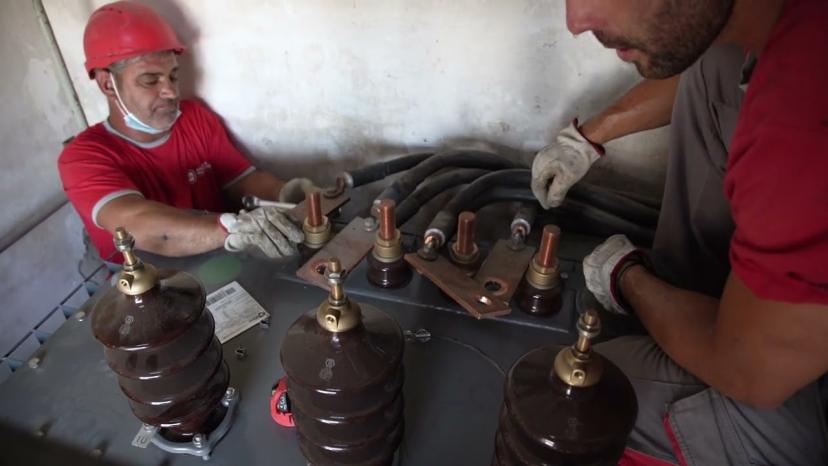
We collaborate in the refurbishment of transformers with performance equal to or better than the original, reducing raw materials and extending the useful life of the equipment.
3. Use of sustainable materials
We are replacing mineral oils with vegetable oils in transformers, reducing environmental impact and improving operational safety.
4. Improved waste management
We want to ensure the efficient separation, recovery and recycling of waste generated, through collaboration with qualified partners and the application of best practices in traceability and control.
Intelligent Asset Lifecycle
  1. We define requirements from the outset, assessing materials, durability and ease of maintenance. This phase ensures informed choices from the design stage onwards.

  2. We select suppliers committed to sustainable practices. 

  3. During use, we monitor our assets and use advanced analytical models that allow us to determine in advance the behaviour of technical assets over time.

  4. Whenever possible, we reuse assets that are still in good condition and can fulfil their original function at another location in the network, such as smart meters and transformers.

  5. Working with manufacturers or external partners, we recondition equipment, returning it to the network with high standards of quality and safety.

  6. Upon reaching the end of their functional life, assets are sent for responsible disposal, with sorting and separation of materials.

  7. We prioritise waste recovery. 

  8. Where applicable, we explore alternatives for reusing obsolete equipment, such as donation. 

0 Resultados
From theory to practice: how do we apply circularity to the management of our assets?

E-Redondo Project

E-REDONDO is a project that aims to promote the principles of a circular economy in distribution network assets.

E-REDONDO 1.0 (2023)

  • 6-month project
  • Objective: to assess the circularity of some E-REDES assets, develop a roadmap of measures to promote circularity in distribution networks, and raise awareness among employees

E-REDONDO 2.0 (2024-2026)

  • 2-year project
  • Objective: to implement the roadmap of measures in the organisation in three areas of activity:

    1) Circular purchasing;

    2) 3Rs (Reuse, Repair and Refurbishment);

    3) Explore end of life.

Expected impact of the E-Redondo Project
Environmental Impact
Reduced extraction of raw materials (reuse), lower volume of waste for landfill/incineration, and contribution to environmental goals (e.g., carbon neutrality, EU Green Deal, Clean Industrial Deal).
Operational Impact
Improved management of network equipment inventory, greater traceability of end-of-life assets, integration of circular criteria into purchasing/logistics processes, and creation of new value streams (e.g., resale, donation).
Social Impact
Partnerships with social entities for equipment donations. Creation of shared value with suppliers through circular criteria. Contribution to the company's ESG (Environmental, Social, Governance) agenda.
Impact on Organisations
Increased awareness of circular economy within the organisation. Involvement of different departments in the equipment life cycle. Evolution in internal consumption culture (from “use and throw away” to “reuse and value”).